Showing posts with label . Japan. Show all posts

Thursday, November 8, 2018

[JAPAN] A Foodie's Guide to Tokyo

Tokyo is the capital of Japan, it is the world's most populous metropolis and it offers seemingly unlimited choices of dining to its visitors. It has almost everything that is expected of a city and it has more Michelin-starred eateries than any other city as well. I am in love with this city and these are some of the best eats during my trips. 


IZUEI HONTEN
2 Chome-12-22 Ueno, Taito-ku, Tokyo-to 110-0005, Japan
Operating Hours: 11.00 am to 10.00 pm (Daily)

This 260 years old restaurant is just a stone's throw away from the Ueno train station. They are still using the traditional methods of cooking eels that have been passed down for generations. Please ask for an English menu if you have difficulties in ordering.


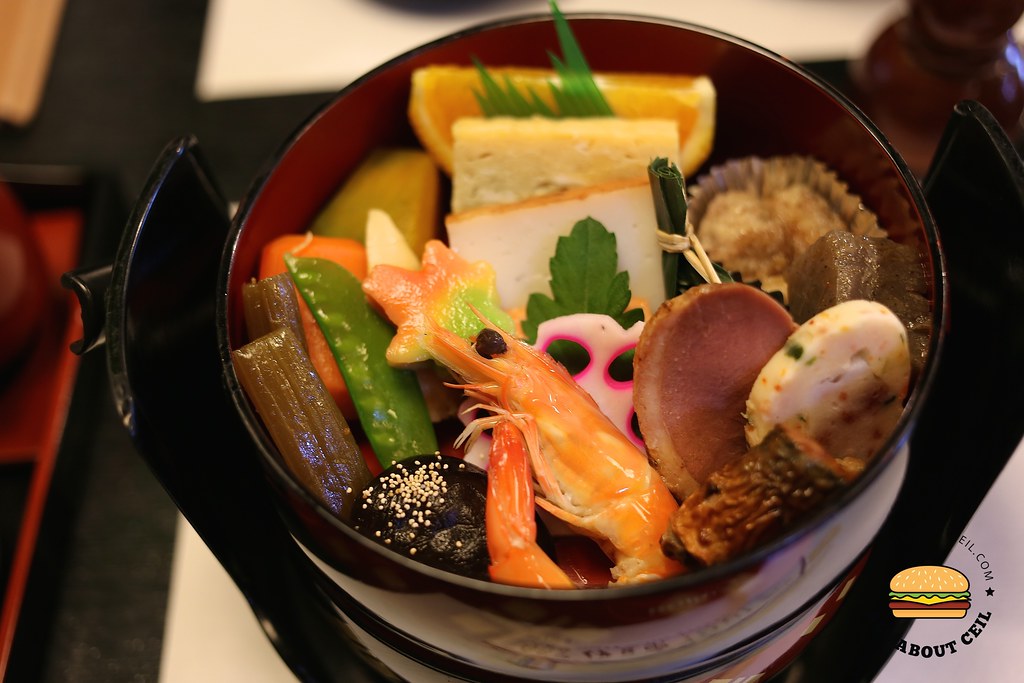
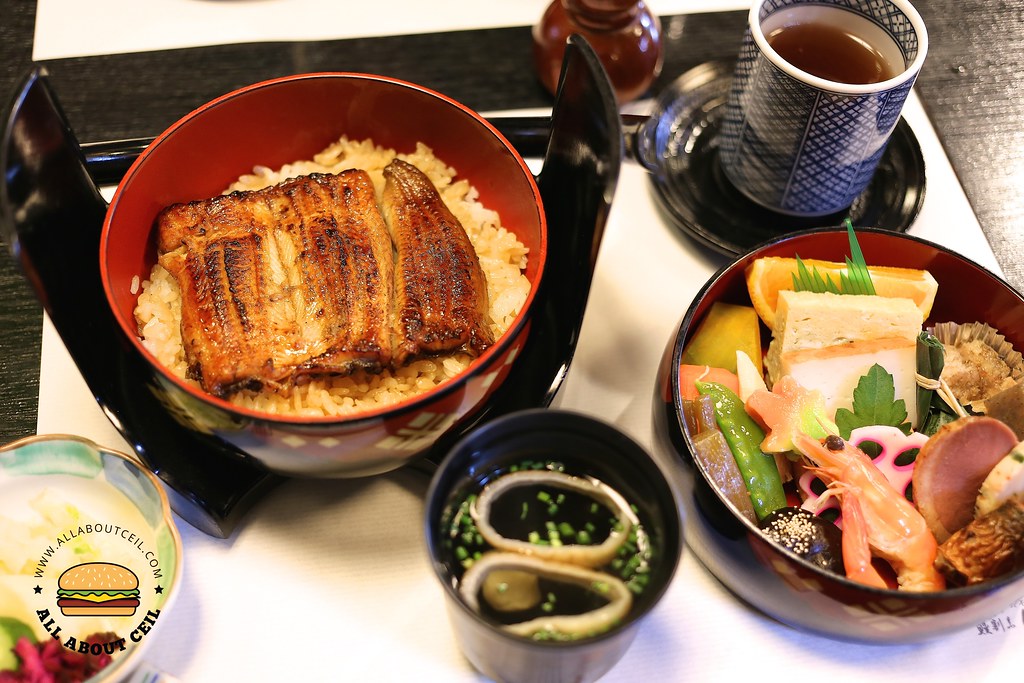
Himeijyu, literally means 'Princess Box' which consists of a two-tiered bowl, the top layer is filled with various veggies and seafood as an appetizer and the bottom layer is unagi with rice, served with a Kimosui (eel liver soup) and a dish of Japanese pickles. The set is priced at ¥3,780.

Tonojyu, which means 'Prince Box', consists of 2 layers of unagi and rice, a layer on top of another layer and it also served along with kimosui and Japanese pickles at ¥6480.


NIHONBASHI TAMAI ANAGO
2-9-9 Nihonbashi, Chuo-ku
Operating Hours: 11.00 am to 2.00 pm / 5.00 pm to 9.30 pm (Mon to Fri) / 11.30 am to 3.30 pm / 4.30 pm to 8.30 pm (Sat, Sun & PH)

This Michelin Bib Gourmand-rated eatery is specialized in Anago Chirashi, it is quite a rare find in Tokyo as most of them are specialized in serving unagi. Their main outlet in Nihonbashi, located in an old Showa building that has a long history dated back to Showa 28 (1953). Hakomeshi is a must try if you are here, Hakomeshi is a term coined by Tamai to describe the style of eating their anago in the traditional Japanese lacquered boxes, which in the 1600s, were tiered into 3 to 5 layers as a convenient way to store and transport food. There are 3 different sizes, the small one at ¥1,750, the medium one at ¥2,950 and the large one at ¥3, 950. 


Do not eat it all but left a quarter for the chazuke, a Japanese dish made by pouring the dashi (broth) over cooked rice. This is done by placing the cooked rice and anago into the small bowl then pour the hot anago dashi over it. You may also sprinkle the remaining negi and yuzu to flavor it. 


To experience Tamai's Hakomeshi, first is to choose the type of anago, there is a choice of simmered in sweet sauce or cooked on the grill, you could also choose to have both, it is serving on rice. To start, have a few bites in the original flavor to experience the fresh and seasonal anago. Then, for a change in flavor, add a touch of wasabi (Japanese horseradish) for a spicy mustard taste. Next, try to sprinkle with some Japanese spices, like 'negi' (leeks) for a mild onion flavor and 'yuzu' for a fresh citric flavor.


ISEHIRO KYOVASHI
1-5-4 Kyobashi Chuo-ku Tokyo 10-0031
Operating Hours: 11.30 am to 2.00 pm / 4.30 pm to 9.00 pm (Closed on Sundays & Public Holidays)

Opened in 1921, they are specializing in yakitori using selected quality ingredients. It has maintains the same high standard all these years. The five-skewer yakitori-don at ¥1,850 during lunch is strongly recommended. It consists of a variety of different chicken parts like the liver and lean Sasami breast, featuring different flavors and textures. 


NARIKURA
1-32-11 Tadadanobaba, Shinjuku, Tokyo, Japan
Operating Hours: 11.00 am to 2.00 pm / 5.30 pm to 8.30 pm (Closed on Thur & Sun)

It is recommended on the Michelin Bib Gourmand list. There is always a queue and it is usually long, it extends from the basement stairway to street level mostly. There are 2 main types of pork for selection, there is Rosu (loin) and the other is Hire (fillet). Loin has more fats in the meat, it is usually more tender than the fillet. 


There are different types of tonkatsu, Kiramugi at 190 grams for ¥3200 is amongst the popular choices, using the Aguu breed pork from Okinawa. Another recommended item would be Snow-aged Pork at the same weight and price from Niigata. The orders are served with shredded cabbage, potato salad, Japanese pickles and a bowl of miso soup. Their tonkatsu, arguably, amongst the best in Tokyo. 


GYUKATSU MOTOMUTA
3-32-2 Shinjuku, B1F, Shinjuku 160-0022, Tokyo, Japan
Operating Hours: 11.00 am to 9.00 pm

Gyukatsu, a deep-fried breaded beef cutlet is as popular as the other Japanese cuisines that you got to try. It is like Tonkatsu but not quite so. This is arguably the most popular restaurant in Tokyo for serving this dish. There are a few outlets in Tokyo and the queues are usually quite long no matter which outlet, it is so even during the odd hours. The menu is quite simple, the only item there is gyukatsu at different sizes, starting from 100 grams (¥1,200) 130 grams (¥1,400) and 260 grams (¥2,100).  There is an option to have it with grated yam for an additional ¥100 and it is supposed to drizzle over the rice. 


The sliced beef is served rare but you could cook it to your preferred doneness using the small grill. It is served along with a pile of cabbage, barley rice, potato salad, pickles, and miso soup. There are also condiments available on every table to go with the gyukatsu. 


SHIN UDON
2 151 0053, 2 Chome-20-16 Yoyogi Shibuya Tokyo 151-0053 Japan
Operating Hours: 11.00 am to 10.00 pm (Mon to Thu & Sun) / 11.00 am to 11.00 pm (Fri & Sat)

This is a restaurant specializing in Udon, just a stone's throw away from Shinjuku station, close to the popular Fu-unji ramen. They have been consistently ranked amongst the best udon restaurants since their opening in April 2011.


Their menu has simple descriptions in English. The price range is in between ¥1,000 to ¥1,300 per dish. There is a selection of Zaru Udon, Kake Udon and Bukkake Udon. Zaru Udon is boiled and served cold with the dipping sauce served separately, its texture is springier with a richer flavor. Kake Udon is boiled and served in a lighter taste hot broth, its texture is smoother as compared to the Kake Udon. The Bukkake Udon is boiled then served with a bit of broth, its texture is in between Zaru Udon and Kake Udon. The recommended dish to try is Kake Udon with tempura set at ¥1,300. 


FUUNJI
2-14-3, Yoyogi, Shibuya-ku, 151-0053 Tokyo, Japan
Operating Hours: 11.00 am to 3.00 pm / 5.00 pm to 9.00 pm (Mon to Sat)

This is a small shop hidden on a quiet street near Shinjuku Station and not too far from Shin Udon. They serve one of the best bowls of tsukemen in Tokyo. And, there is always a queue. You will order from the vending machine and wait further. There are 2 types of ramen and 2 types of tsukemen, the regular and the special option, and the special options included an egg and pork belly. Tsukemen is recommended as this is what they are known for. Deluxe Tsukemen, which also known as Special Dipping Noodle is priced at ¥1000, it is the same price for the portion size of noodles from small to the large serving.


The flavors and textures nicely complemented each other for a perfect balance. There was nori, pork belly, bamboo shoots and a soft-boiled egg in the broth with dashi powder. 


Tuesday, September 11, 2018

[Japan] Shake Shack : my favorite fast food joint

Shake Shack is likely to be coming to Singapore. If you wonder what exactly is Shake Shack, it is a fast-growing American fast food restaurant chain based in New York City. It started out as a humble food cart outside Madison Square Park in 2001 serving only hot dogs and it moved to a food stand in 2004, it included burgers, hot dogs, fries and milkshakes to its menu. It has over 170 outlets in America and overseas. It is rumored to be opening at the upcoming Jewel Changi Airport in early 2019. 

I had it for lunch when I was in Tokyo just recently. There are a total of 9 outlets in Japan and 5 of them are located in Tokyo. I went to the outlet at Ebisu in Tokyo. The restaurant was almost full during lunch on a weekday. I ordered their signature Shack Stack, ShackBurger, Crinkle Fries, Strawberry Milkshake, and the Shack-made Lemonade. Their beverage menu is customized to the local flavors of the city, just like the special Hong Kong Milk Tea Shake together with 3 different Hong Kong style frozen yogurt desserts at their outlet in Hong Kong.


The Strawberry Milkshake is thick and creamy with a well-balanced sweetness. Their milkshakes have been reviewed as one of the best. The Shack-made Lemonade consists of Shack-made syrup in original or featured flavor. The featured flavor then was raspberry. 


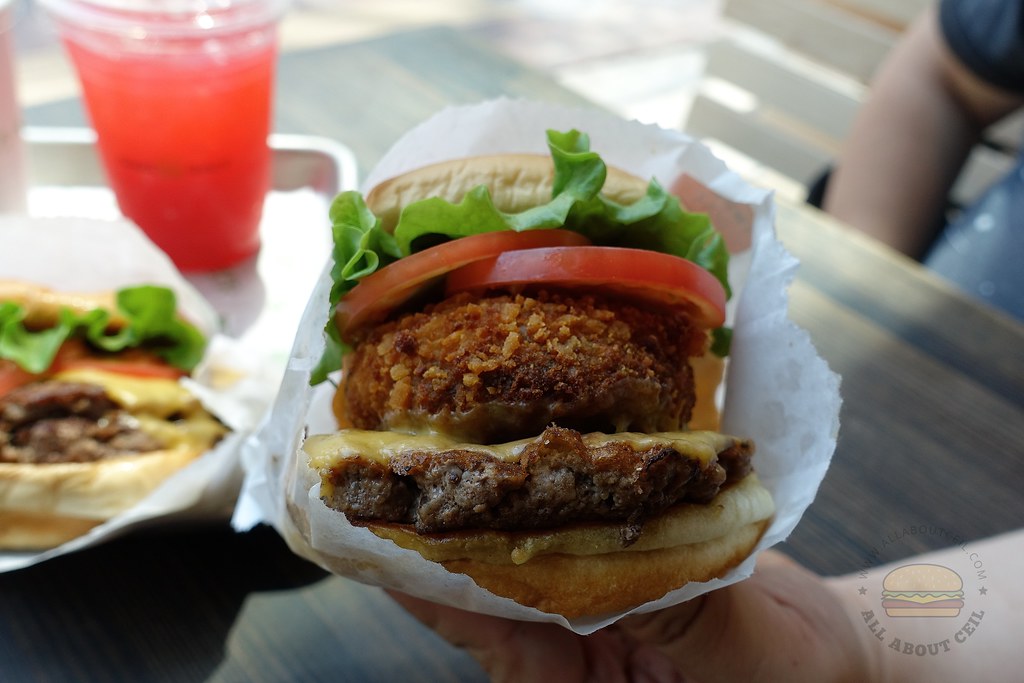
ShackBurger comes with single or double Angus beef patties topped with lettuce, tomato, and ShackSauce, sandwiched between the potato buns. It is a no-frill cheeseburger that done really well. The quality of ingredients determines the taste of the burger which set apart a great burger from a mediocre one. The ShackSauce is none other than mayonnaise, dijon mustard, ketchup, cayenne pepper and pickle juice put together. 


Shack Stack is actually the combination of Cheeseburger and Shroom Burger. It consists of an Angus beef patty and a deep-fried breaded portobello mushroom filled with melted muenster and cheddar cheese. It was placed on a melted cheese then topped with lettuce. tomato and the ShackSauce, sandwiched in between the potato flour buns. 


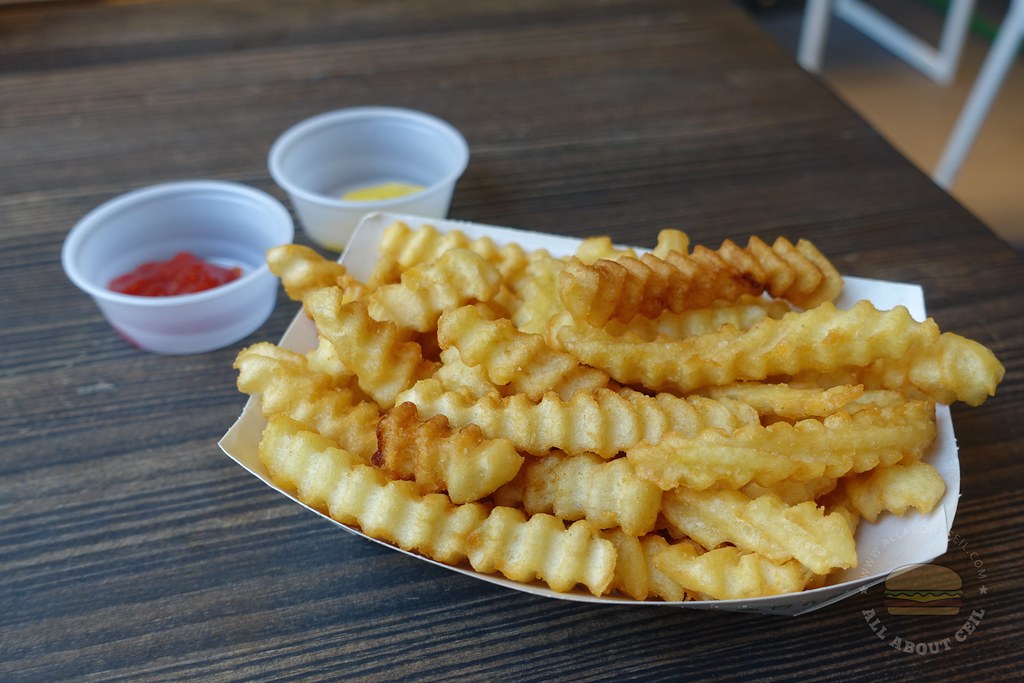
The Crinkle Fries is one of the popular items on their menu, it is the must-order to go along with their burgers.


I am eagerly waiting for their opening in Singapore. 


SHAKE SHACK
Ebisu Minami 1-6 Shibuya-ku Tokyo JAPAN
Operating Hours: 10.00 am to 10.00 pm (Daily)

Thursday, January 19, 2017

[JAPAN] Gyukatsu Motomuta : a memorable eating experience

Gyukatsu is a deep-fried breaded beef cutlet and is quite similar to the Tonkatsu. And, the most famous Gyukatsu in Tokyo is at Gyukatsu Motomura, which is one of the most popular restaurants in serving this dish. The queue is usually quite long and it could easily be an hour or even longer than that, it is even so during the off-peak hours.

Their menu is simple as there is nothing else except Gyukatsu but it comes in different sizes. There are the 100 grams serving at ¥1,100, this followed by 130 gram at ¥1,300 and 260 grams at ¥2,100. There is an option to add grated yam for ¥100 and you are supposed to drizzle it over your rice. Some reviews that I came across actually advised going against it as it is not quite appealing and it did not taste like yam and so, I did not order it.


It served along with a pile of shredded cabbage, barley rice, potato salad and pickles with miso soup. The beef cutlet is deep-fried quickly for a slight crispiness on the outer layer but still fairly rare within. 


There is a stone grill for every diner and if you do not like it to be too rare, you could sear it a little to your preferred doneness and then dunked it into the wasabi & soy sauce or horseradish sauce or sprinkled with the rock salt. I did not like eating it with wasabi and soy sauce but I do prefer to have it with horseradish and a bit of rock salt to enhance the savory taste of the beef.  


This is one of the best meals that I ever had. I do think it is worth the long wait. And, there are currently 6 branches in the Tokyo and those in Shibuya are always very crowded so you might want to go the other less crowded branches for a shorter waiting time.


GYUKATSU MOTOMUTA
. 3-32-2, B1F, Shinjuku, Shinjuku-ku, Tokyo, JAPAN
Operating Hours: 11.00 am to 9.00 pm

Other branches:
. 3-18-10, B1F, Shibuya, Shibuya-ku, Tokyo, JAPAN
. 2-19-17, B1F, Shibuya, Shibuya-ku, Tokyo, JAPAN
2-15-13, B1F, Shinbashi, Minato-ku, Tokyo, JAPAN
1-6-14, Yaesu, Chuo-ku, Tokyo, JAPAN
2-5-1 Hamamatsucho, Minato-ku, Tokyo, JAPAN

Friday, January 13, 2017

[JAPAN] Izuei Honten : a 260 years Unagi specialty restaurant

It is exciting to dine in a 260 years old restaurant that is specialized in Unagi since mid-Edo period till now and it has been highly recommended for Unagi lovers. The location is just a stone's throw away from the Ueno Okachimachi train station, across the street from Ueno Park's Shinobazu Pond. The 7-storey building is quite prominent even from far.

They are still using the traditional methods of cooking eels that have been passed down for generations. Please ask for an English menu if you have difficulties in ordering, it has pictures of the set meals with its prices clearly stated and simple descriptions. The staff is mostly women in yukata, a casual summer kimono, evidently trained in their manners and serving procedures to bring forth the best hospitality experience.


The condiments like extra unagi sauce, sansho pepper, and soy sauce are available on the table.


I ordered a Himeijyu, literally means 'Princess Box' which consists of a two-tiered bowl, the top layer is filled with various veggies and seafood as an appetizer and the bottom layer is 2 pieces of freshly grilled unagi on top of Japanese steamed rice glazed with their special homemade sauce and a dish of Kounomono, Japanese pickles. The traditional accompaniment to unagi is usually a small bowl of kimosui, eel liver soup.

The set is priced at ¥3,780. Everything was freshly made, handcrafted and nicely presented, it actually tasted as good as it looks. The unagi was charred-grilled to perfection with a hint of smokiness and a soft texture.


I also ordered a Tonojyu, which means 'Prince Box'.


It consists of 2 layers of unagi and rice, a layer on top of another layer and it also served along with kimosui and Kounomono at ¥6480. The perfectly crisp skin was infused with an aromatic flavor of the charcoal smoke but still soft and light within.


This is probably the best that I have ever eaten, it is utterly delicious though slightly steep in prices but definitely worth the experience.


IZUEL HONTEN
2 Chome-12-22 Ueno, Taito-ku, Tokyo-to 110-0005 JAPAN
Operating Hours: 11.00 am to 10.00 pm (Daily)

Saturday, January 7, 2017

[JAPAN] Shin Udon Tokyo : the best handmade udon that I have ever had

Udon Shin is a restaurant specializing in Udon, a kind of thick wheat-flour noodle of Japanese cuisine. They have been consistently ranked amongst the best udon restaurants in Tokyo since their opening in April 2011. It is located in an alleyway a stone's throw from Shinjuku station, about 5 minutes walk to its location, which is in a hidden alleyway of South West Shinjuku area. There are only 6 counter seats and 2 tables in there, only a total of 10 customers are to be served at the same time. This is a local's favorite and there is always a long queue, the waiting time can be quite long but it is worth the while. While waiting outside, the service staff was handing out the menu and started to take the orders. 


They specialize in handmade udon that is made fresh in-house with a strong emphasis on the quality as well as the freshness and so, the noodles are never made in advance. The handmade noodles are cut and boiled fresh only upon the order is made. They even adjusted the boiling time of the noodles by taking into the consideration of the temperature and humidity of the weather. 


Their menu has simple descriptions in English so it is easy to order. The price range is in between ¥1,000 to ¥1300 per dish on their menu. The prices are quite reasonable. 


There is a selection of Zaru Udon, Kake Udon, and Bukkake Udon. Zaru Udon is boiled and served cold on the plate by itself and the dipping sauce that has a richer flavor is served separately from it, its texture is springier. This is supposedly the best way to enjoy the delightful texture of the noodle. Next is Kake Udon, it is boiled and served in a lighter taste hot broth with, its texture is smoother as compared to the Kake Udon. The Bukkake Udon is boiled then served with a little broth, it is the middle of Zaru Udon and Kake Udon. After the selection of Udon, you could also choose your choice of toppings like tempura, beef or grated radish. 


I ordered Kake Udon with tempura set (¥1300) that consists of an assortment of shrimp with vegetable tempura. Even though the orders were placed while waiting in line but the preparation work would only start until we were seated then the kitchen started to roll out the dough for the noodles and cooking it. It took about 10 minutes before the tempura assortment was served. It consists of 2 pieces of shrimp and assorted vegetables. They were lightly battered then freshly deep-fried to ensure its freshness as well as the crispiness and not too greasy as well. 


The warm udon noodles were served in a dried bonito-based broth that was quite appetizing and I ended up slurping every drop of it. The texture of the udon is firm and soft with its tensile strength still intact.


I also ordered Bukkake Udon serving with a special soft-boiled tempura egg and cooked pork fillet (¥1200). The noodles were springy and cooked perfectly. I started by breaking the tempura egg gently and letting the egg yolk flow out before mixing it with the noodles. The balance of the flavors was superb. Those slices of pork fille were quite tender. 


I have had many good meals during this trip but these stood out. It is just so amazing that how something so simple can actually taste so good. Highly recommended. 


SHIN UDON
151-0053, Tokyo-to, Shibuya-ku, Yoyogi, 2-20-16, JAPAN
Operating Hours: 11.00 am to 10.00 pm (Mon to Thu & Sun) / 11.00 am to 11.00 pm (Fri & Sat)

Thursday, December 22, 2016

Japanese Soba Noodles Tsuta, Singapore Vs Japan - World's First Michelin-starred Ramen : Are they equally good?

Chef Yuki Onishi, founded Japanese Soba Noodles Tsuta in January 2012, it is a shop nestled in the residential area of Sugamo, Tokyo. They became the first Michelin-starred Ramen restaurant in 2015.

Chef Onishi after giving up a promising corporate career, returned to Kanagawa, his hometown, to follow in his father's footsteps in 1997. He acquired the art of making ramen in his father's ramen shop before moving ahead to pursue his dream of opening a ramen shop. When he started his own shop, his trademark dish is Shoyu Ramen with the signature Shio Ramen. The shoyu broth consists of 3 different types of Shoyu : cedar cask-aged Marudaizu natural soy sauce from Wakayama Prefecture blended together with a naturally brewed, aged Nagano soy sauce and a white soy sauce to intensify the flavor. This is added to the soup stock together with kelp from Hokkaido, pike from Mie, clam stock and other ingredients then boiled to bring forth its full flavors. The noodles are handmade and serving fresh daily using 4 types of whole wheat flour and whole grains.

JAPANESE SOBA NOODLES TSUTA, SINGAPORE
9 Scotts Road #01-01 Pacific Plaza SINGAPORE 228210
Operating Hours: 11.00 am to 10.00 pm (Daily)

Tsuta Singapore has opened on 6 November 2016, it has only 18 counter seats and is located on the ground floor of Pacific Plaza. This is the only outlet of Tsuta, the second in the world after their original shop in Japan. This is a partnership with Hersing Corporation, an investment company which is also behind Tim Ho Wan and Kam's Roast Goose that are located in the same building. 

The queue is outside the restaurant and it started as early as 30 minutes before their operation time. I was the number 7 in the queue when I went there at 10.45 am. 


Their menu also consists of a limited selection of side dishes such as Niku Meshi (diced roasted pork on rice served with onion sauce) at $6, Ro-su Meshi (sliced roasted pork shoulder on rice topped with fragrant butter sauce) at $6 and soup chazuke at $2, the rice can be added to the remaining soup together with bonito flakes and Japanese seaweed. An additional portion of soba noodles is at $1.00, bamboo shoots at $2.00, rice at $1.80, char siu at $2.00 per piece and flavored egg at $1.80.


I decided to go with Ajitama Shoyu Soba at $16.80 which consists of a piece of char siu and a flavored egg. I also ordered Iced Wheat Tea at $1.80 to go along, this tea is selected by Chef Onishi as he feels that it complements his ramen most. 


The tickets were handed over to the service staff before I took my seat at the counter. I actually made an effort to check whether am I allowed to take picture of their kitchen before doing so as this is not allowed at the shop in Japan. 


Each bowl is served with 100 grams of noodles. The noodles are made fresh daily using the same combination of whole wheat and grain flours that are directly imported from Japan. It is known as soba noodles as the noodles are of a higher standard than the more common ramen. And, they cooked it just right. The toppings tasted close to what I had in Japan but it was garnished with spring onions. Pork collar is used to make char siu as it is lower in fat with just the same texture and flavor.

The shoyu ramen is made with the same types of shoyu then topped with a dollop of black truffle pureed in truffle oil. The shio ramen is also made with a chicken-seafood broth with Okinawa sea salt and Mongolian rock salt and topped with green olive pureed in truffle oil. The standards are expected to be the same. 


I waited for about 5 minutes for my shoyu ramen to be served. I frowned when I sipped the soup, it was much saltier as compared to what they served in Japan with a rather overpowering taste of truffle oil. I did not manage to finish the soup which is not quite usual for a soup lover like myself.

The standard is not the same and definitely not as good, it might be good during the initial period when Chef Onishi was around but it is so lacking now. It actually tasted quite ordinary, a far cry from what I had in Sugamo, Tokyo. Apparently, it is not even as good as some of the other options for ramen that are here.


There is also plan to include Miso ramen and Tsukeman, a ramen dish that is served with dipping sauce that is already on their menu in Japan.


JAPANESE SOBA NOODLES TSUTA, JAPAN
1-14-1 Plateau-Saka 1F Sugamo, Toshima-ku, Tokyu
Operating Hours: 11.00 am to 4.00 pm / 6.00 pm to 8.00 pm (Closed on Wednesdays)

This is supposed to be the number one ramen in a city of thousands of ramen joints. Their location is a stone's throw from Sugamo Sation on the Yamanote train line which loops around center of Tokyo. To secure one of those 9 seats at the counter for a bowl of Micheline-starred ramen on the same day, you are expected to be there really early. Tickets for set time slots are distributed from 7 am and you are expected to come back later according to the color of the tickets allocated. The colored ticket represents different timing, at 11.00 am, 12.00 pm, 1 pm, 2 pm, 3 pm and 4 pm respectively. Please take note that everyone in the party is expected to be present to get a ticket. 

You are also required to pay a deposit of ¥1,000 in order to receive a ticket. It will be refunded later when you come back later just before you enter the shop and place your order through the vending machine. Do take note that the vending machine is in Japanese. There are only 150 bowls of ramen to be served daily in the price range of ¥1,000 to ¥1,500 ($13 to $20). There is strictly no picture of the kitchen is allowed and only one bowl of ramen per person, sharing is also not permitted. 


The instructions for the ticketing system is listed out and pasted on the wall at just where the queue is supposed to be, which is at the covered entrance to the apartment next to it. 


Their menu is simple, it consists of either soba or tsuke-soba served in a shoyu and shio varieties. Their Shoyu Soba is a soy sauce ramen that is made from a chicken and seafood stock base, enhanced by a soy sauce blend then topped with their signature black truffle oil and black truffle sauce that intensifies the overall umami experience. The broth of shoyu ramen is rich and complex while the freshly made soba noodles are firm, smooth with a desired chewiness that has a clear and nutty flavor, balanced perfectly with the black truffle oil, the char siu is perfectly roasted too.


The shio ramen is lighter and saltier in flavor. The seafood dashi made from the combination of clam and red seabream and it blended really well into the shio soup, which uses Okinawan sea salt and Mongolian rock salt. It is then topped with Italian white truffle oil, green tapenade, tomato and herbs.


You might want to include a trip to Sugamo when you are visiting Tokyo, this is not just for an affordable Michelin-star dining but also a top-class ramen experience. Ultimately, their ramen is so much better than that in Singapore.